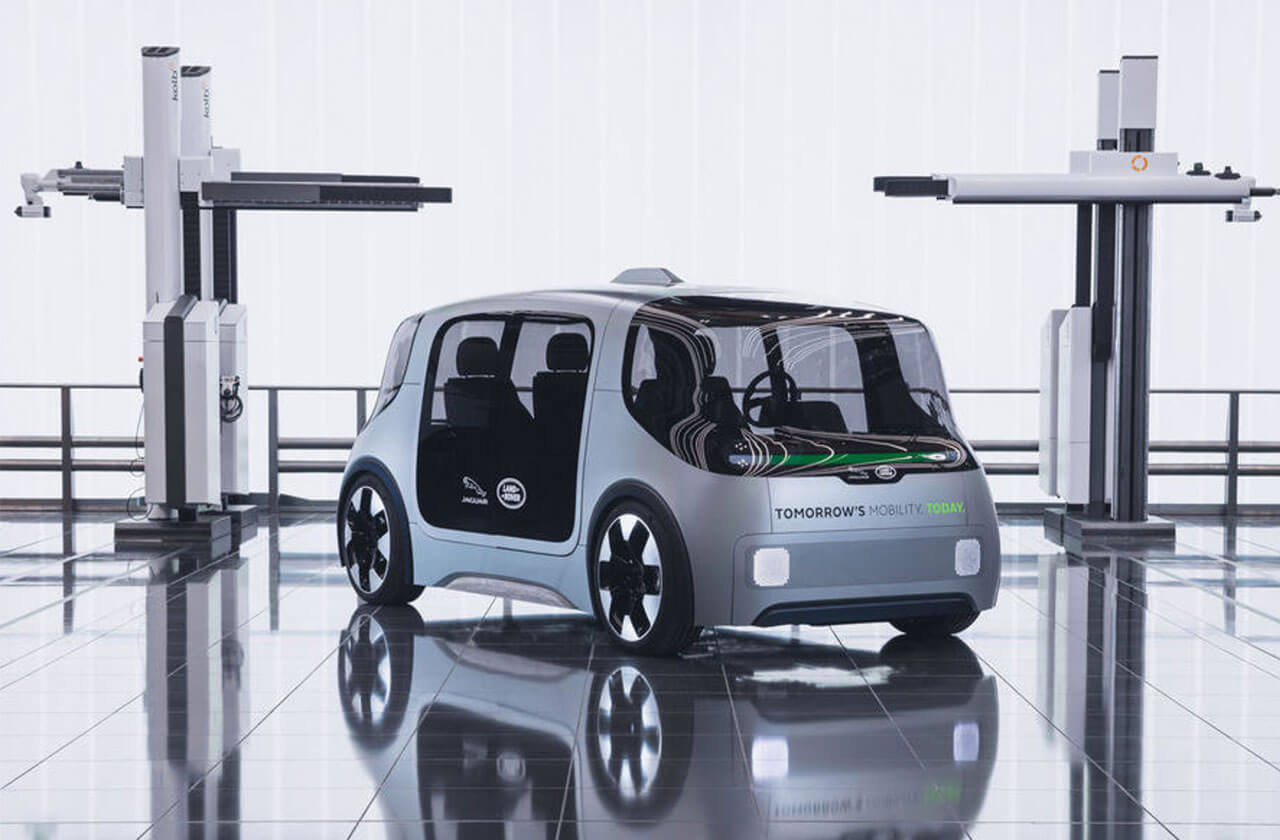
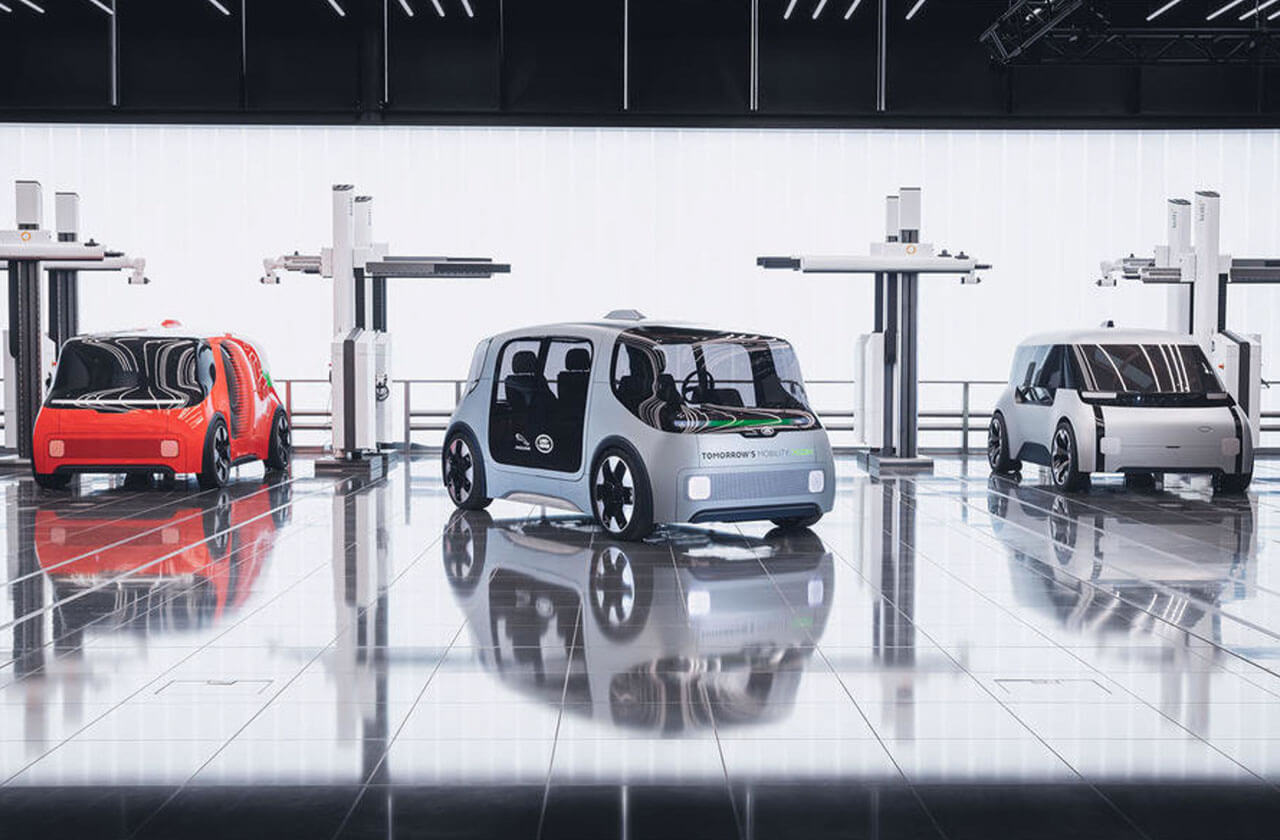
Jaguar Land Rover presented Vector, a project of an unmanned electric platform, on the basis of which it will be possible to build cars of almost any configuration and purpose. The British company has already received government approval to test drones on the roads of England. Prototypes will hit public roads in 2021.
The Vector project is a new platform in the "skateboard" format: it is a flat "cart" with a built-in traction battery. Electric motors, although not integrated into the wheels, do not take up much space. The result is a universal base with a free layout, on the basis of which it is possible to produce vehicles with any type of body.
There is nothing new in this approach: other companies have shown prototypes of similar platforms before. The main question is who will reach mass production earlier than others, as well as whose system will be more successful.
One of the ultimate goals of the Vector project is to move towards Destination Zero, JLR's philosophy of achieving a zero-emissions, zero-accident, and zero-congestion future.
The development of an unmanned electric platform has been going on in the bowels of Jaguar Land Rover for several years. Until today, it remained classified, and only now the company has openly declared its ambitions.
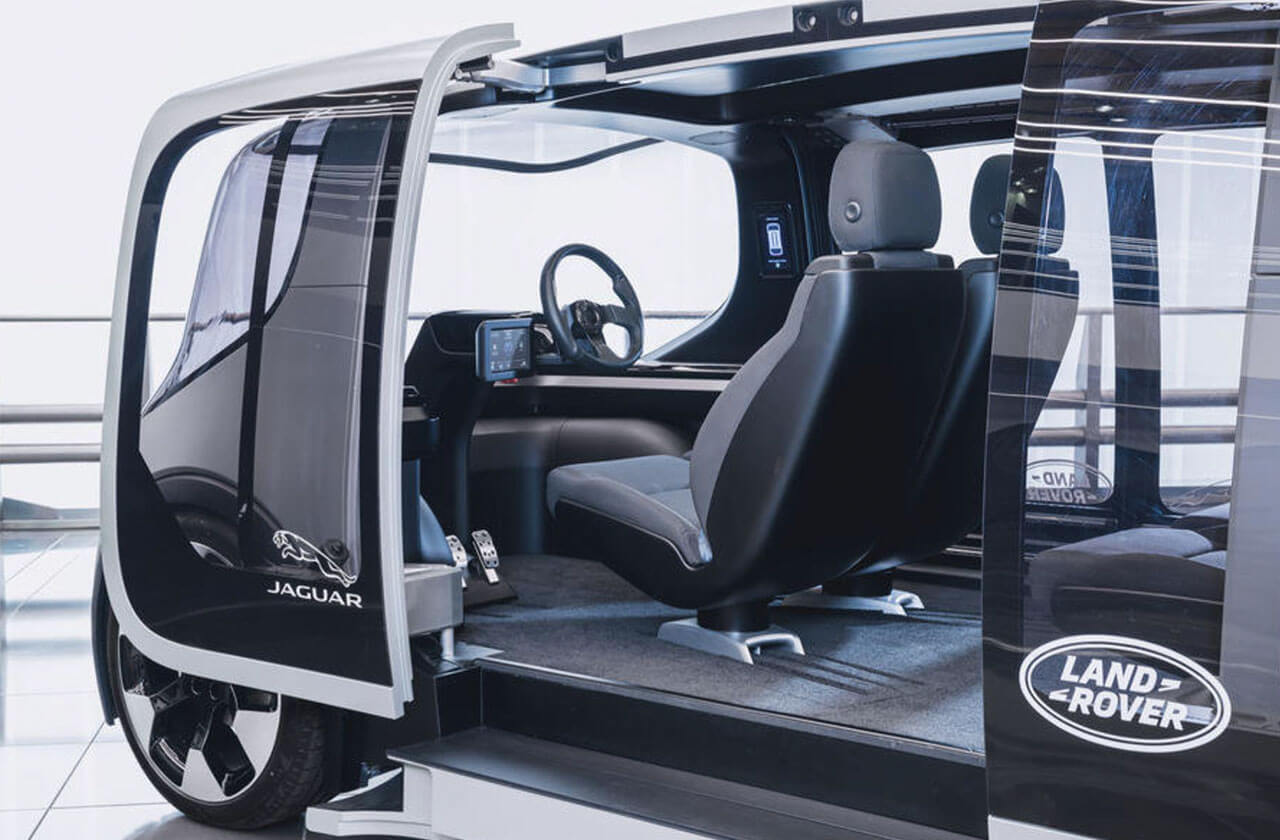
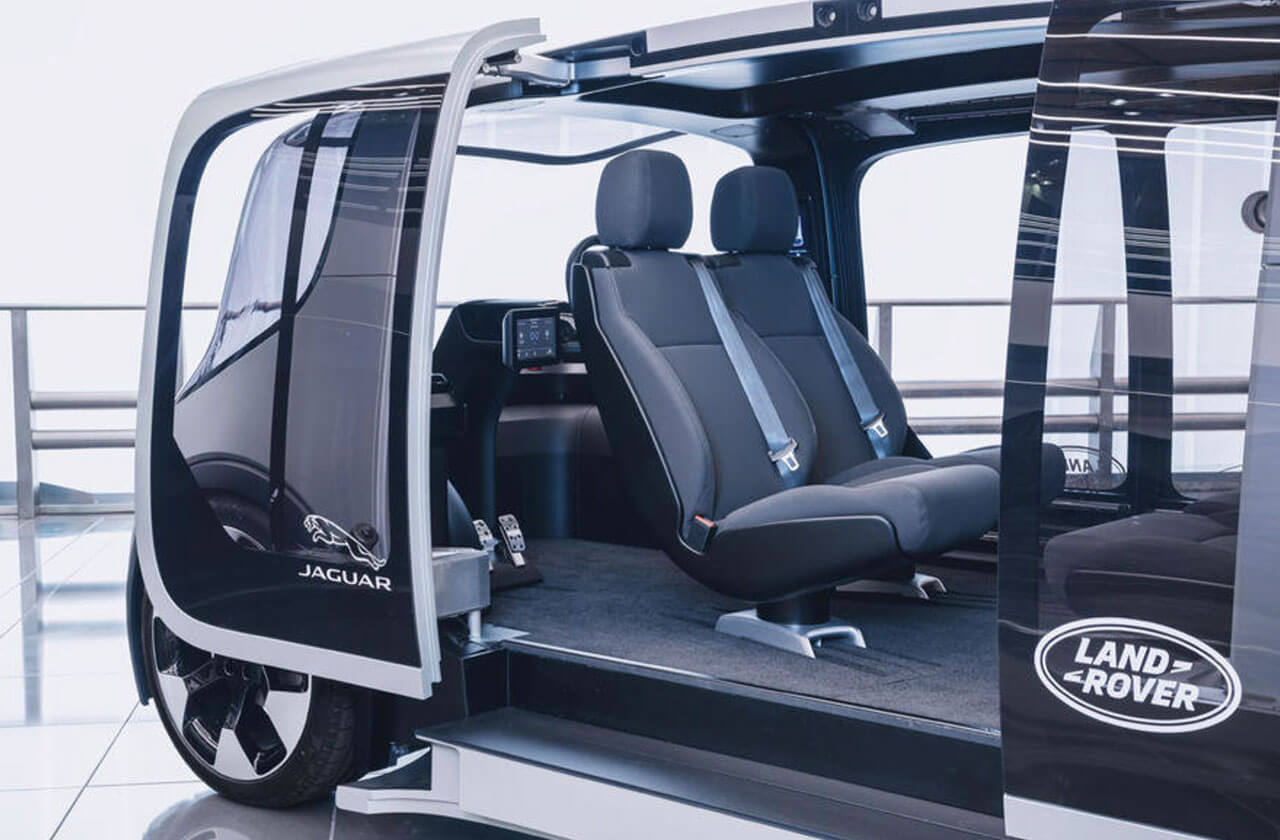
As for the presented configuration, it is an unmanned van with sliding doors. The cabin has four chairs that can rotate around its axis. This allows passengers to sit both in the direction of travel and facing each other. The steering wheel and pedals are still preserved, but their use is “optional”. The cockpit space of the experimental vehicle allows the seats to be configured both for personal use and for the transport of small loads.
Jaguar Land Rover presented the project of an unmanned platform Vector